

The Short Answer
You’re comparing beadboard and shiplap. That means you’ve already decided you want a wood panel wall—you just haven’t decided how to get there. Good. It covers what’s the difference between beadboard and shiplap?, beadboard: best for classic, detailed spaces, shiplap: best for modern rustic and accent walls, giving readers a practical way to understand the design opportunity and choose the right wood wall approach.
Good. That’s exactly the right question to be asking. Because beyond the classic debate, there’s a third option most people don’t consider until they’re halfway through a contractor quote: peel-and-stick real wood planks that go up in an afternoon, without the saw, without the nails, and without the mess.
But first, let’s settle the beadboard vs. shiplap question properly.
What’s the Difference Between Beadboard and Shiplap?
At a glance:
| Beadboard | Shiplap | |
|---|---|---|
| Pattern | Vertical panels with narrow ridges (“beads”) | Horizontal or vertical planks with a shadow gap |
| Look | Classic, cottage, Victorian | Rustic, farmhouse, coastal |
| DIY Difficulty | Moderate—precise cuts around fixtures required | Easier—interlocking rabbet joints self-space |
| Best For | Lower wainscoting, traditional interiors | Accent walls, full-wall coverage, modern-rustic spaces |
| Typical Cost | $1.50–$4/sq ft + labor | $1–$3/sq ft + labor |
| Paint or Stain | Yes | Yes |
Both are real, legitimate options with decades of use in American homes. The “right” choice comes down to your aesthetic and how much work you want to put in.
Beadboard: Best For Classic, Detailed Spaces
Beadboard gets its name from the small rounded ridge—the “bead”—that runs between each vertical panel. The vertical orientation draws the eye upward, which makes ceilings feel taller. It’s a natural fit for:
- Wainscoting (lower third of a wall, usually topped with a chair rail)
- Bathrooms and mudrooms—the vertical panels shed moisture better
- Cottage, Victorian, or coastal interiors—anywhere the detail reads as intentional elegance
Installation reality: Beadboard is more demanding than it looks. Precise spacing matters. Cutting around outlets and fixtures requires patience and skill. If you’re new to DIY, plan for a few mistakes—and don’t schedule it the day before company comes over.
Shiplap: Best For Modern Rustic and Accent Walls
Shiplap is the reason Joanna Gaines became a household name. The horizontal boards with their distinctive shadow gap have a clean, graphic quality that works in everything from farmhouse kitchens to mid-century modern living rooms.
Shiplap’s self-spacing design—the rabbet joint overlaps and creates the gap automatically—makes it significantly easier to install than beadboard. It’s a legitimate weekend DIY project for most homeowners.
The catch: Traditional shiplap still requires a saw, a nail gun, paint or stain, and at least a full day of work (usually two). You’re also nailing into your walls—there’s no going back without patching.
The Third Option: Peel-and-Stick Real Wood Planks
Here’s where most comparison articles stop. We’ll keep going.
“I have used Stikwood on several design projects. Easy to use. Brings color and texture to any wall. Hampton Stikwood looks like Shiplap. I have tried copycat products but they do not compare to Stikwood.”
—Denise W., verified Stikwood customer ★★★★★
If what you actually want is a stunning wood wall, installed over a weekend, without a contractor—peel-and-stick real wood planks are worth a serious look before you commit to either traditional option.
Stikwood invented this category. The planks are 100% real wood—not laminate, not vinyl, not a printed film. They come pre-finished in 30+ stains and wood species. You peel the backing, press the plank to the wall, and move on.
| Traditional Shiplap | Traditional Beadboard | ⭐ Stikwood Peel & Stick | |
|---|---|---|---|
| Material | Real wood | Real wood or MDF | 100% real wood |
| Installation | Saw + nail gun + paint | Saw + precise spacing + paint | Peel & stick—no tools needed |
| Timeline | 1–2 days | 1–2 days | 2–4 hours |
| Reversible? | No | No | Yes—removes cleanly |
| Pre-finished | No (paint/stain required) | No | Yes—30+ finishes |
| Contractor Needed? | Optional but common | Recommended for beginners | No—true DIY |
| Made in USA | Varies | Varies | Yes (Grand Rapids, MI) |
| FSC Certified | Varies | Varies | Yes (C125172) |
“Totally transformed our fireplace. Rather than spending on a large scale project to remove and replace the granite, we used Stikwood to recover the face of the fireplace. It looks amazing and gave us the redesign that we wanted for a lot less. This is the 2nd time we’ve used Stikwood for a project.”
—Suzanne N., Verified Buyer ⭐⭐⭐⭐⭐
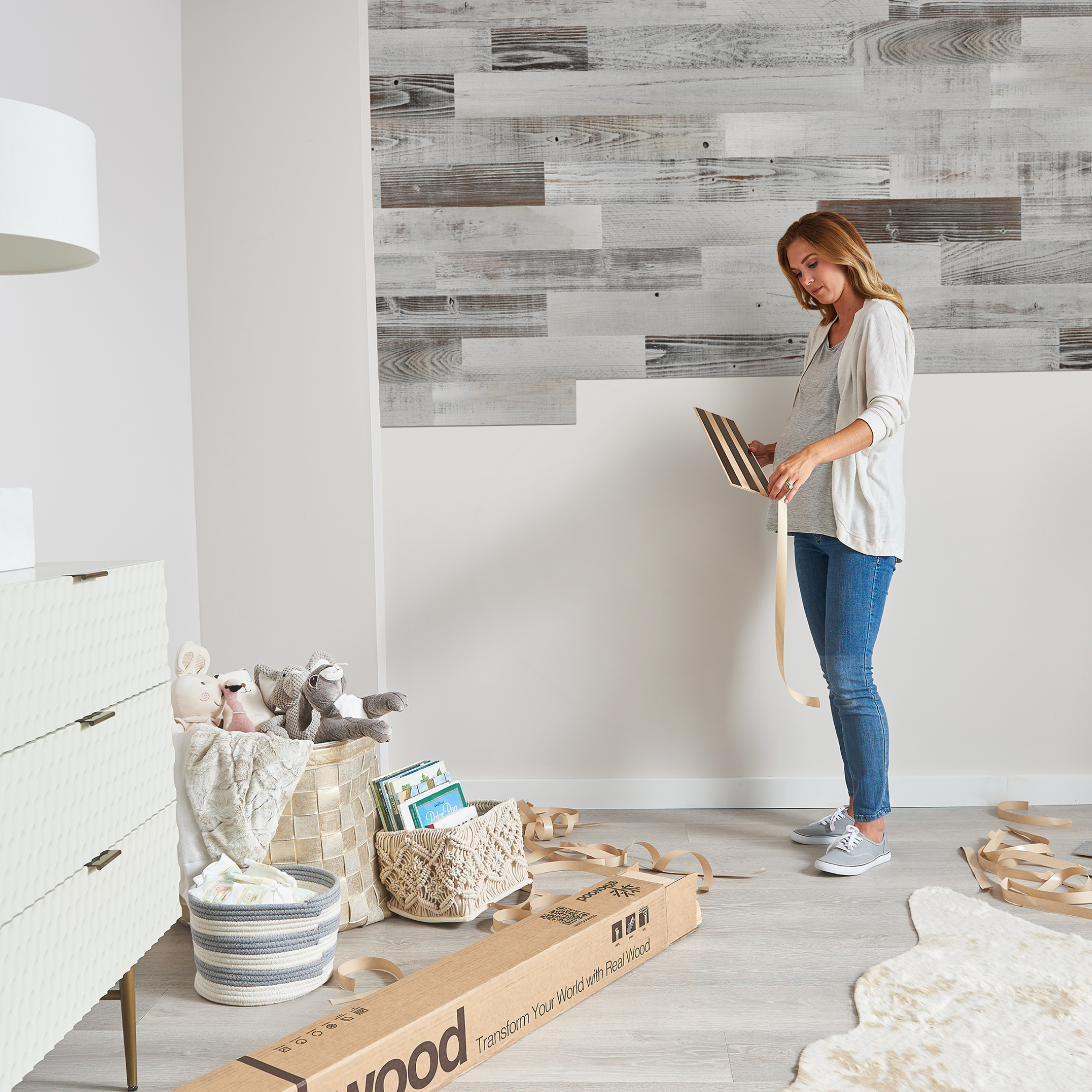
Want More Warmth Than Traditional Paneling?
Stikwood brings authentic grain, texture, and natural variation to your walls—with a simpler installation than traditional beadboard or shiplap.
Which Should You Choose?
Choose beadboard if:
- You want traditional wainscoting in a classic or Victorian space
- The vertical, ridged look is specifically what you’re after
- You (or a contractor) are comfortable with precise custom cutting
Choose shiplap if:
- You want a farmhouse or rustic-modern accent wall
- You’re a confident DIYer with basic power tools
- Permanence is fine—you’re not planning to move or change it
Choose Stikwood peel-and-stick if:
- You want real wood without the contractor bill
- You’re a renter, or you want the option to change the look later
- You want it done this weekend, not scheduled for next month
- You want 30+ finishes and the certainty that it’ll look exactly like the photo
The Bottom Line
Beadboard and shiplap are both excellent wall treatments—the choice between them comes down to your aesthetic preference and how much installation complexity you’re comfortable with.
But if you’ve been hesitating because of the contractor cost, the tool requirements, or the commitment—there’s a better path. Stikwood peel-and-stick real wood planks are 100% real wood, pre-finished, FSC certified, made in Michigan, and go up without a single nail.
Ready to see it in your space?
Related reading:

